Andy Shaw interviews Rick & Swany
This interview took place in October of 2004, the month our book "The Radio Producer's Handbook" hit the bookstores.

ANDY SHAW STRIKES BACK: THE AM RADIO PRODUCERS
By Andy Shaw
Radio is air, literally and figuratively, and it changes like Chicago’s weather. There’s a cool breeze when you groove on a mellow jazz station. A radiant warmth when you absorb a feel-good story on the news. Hot flashes when you catch the excitement of a sporting event or a great rock band. And a cold that chills to the bone when you listen to a talk show host rip the heart out of an unsuspecting celebrity target.
Unfortunately, I know the last weather system all-too-well, and not from a Jerry Taft forecast. Here’s the story: You may recall I have a day job as political reporter at ABC 7, and I moonlight as assistant innkeeper at the Windy City Urban Inn, a Lincoln Park bed-and-breakfast owned by my wife Mary. A couple of years ago, when Chicago Alderman Ed Burke tried to shut down the inn on licensing grounds (as payback for my tough reporting on his multiple conflicts of interest over the years), I was suddenly the hot story, and radio had a field day heralding the titanic battle of two well-known personalities, one from the world of news, the other politics. I was in the uncomfortable position of making news instead of reporting it until the city finally passed a bed-and-breakfast licensing ordinance, which ended the story and the controversy. Thankfully, the radio predators pulled out and I licked my wounds.
But the attack dogs were at it again over the summer when I had a “bad microphone moment” at the Democratic Convention in Boston, yelling for a mike on live TV on the 10 o’clock news. After that one, the radio hosts replayed the gaffe over and over with bells, whistles, phone calls from listeners and sound effects. It was definitely hot radio, and guess what? The shtick worked because of the talents of the people behind the scenes, the producers who help the hosts fill the dead air between the commercials. Kind of like the famous Billy Crystal line in City Slickers, when he tells his son’s class that he’s a radio spot salesman who, in effect, “sells air.” The kids in the class look dumbfounded. But when the producers of the best radio shows are doing their jobs well—lining up the celebrity guests and callers, prepping the big-money hosts with all the relevant information, making sure everything runs on time, and hitting the buttons that embellish the broadcast—that “air” sells like lottery tickets on a $100 million jackpot day.
All of this comes to mind as I finish reading a wonderful book by a couple of well-respected Chicago radio producers: Rick Kaempfer, who’s produced for Steve Dahl, Garry Meier and John Records Landecker; and John Swanson who handled Jonathan Brandmeier, Kevin Mathews, Steve Cochran and, most recently, the eminently successful Eric and Kathy Show on WTMX-FM.
These guys have collaborated on the first-ever how-to book for would-be radio producers. And I’ve gotta tell you, it’s the most interesting and best-written technical manual you’re likely to come across for a while. These guys walk you all the way through, including getting your first job (line up an internship while you’re in college—it’s the best way to get in the door), running a sophisticated computerized audio board (technophobes like me need not apply), keeping a show moving successfully (a mixture of balls, balance and bravado), maintaining a detailed list of phone numbers to reach key guests instantly (I always wondered where those calls in the middle of the night came from) and figuring out how to survive the inevitable clash of egos, management shake-ups and ratings slides that periodically roil the radio business.
“This is the book we wish was handed to us on our first day as producers,” they write in the introduction. “We don’t want another generation of producers tossed into the deep end of the radio pool without being taught how to swim.” The book moves breezily through an overview of radio, a detailed description of the job (p is for psychologist, r is for researcher, o is for organizer, etc.), a day-in-the-life section, a primer on getting that first job, a brief explanation of radio’s technical side, a chapter on “climbing the ladder” (who doesn’t want to make a few more bucks or become the host?) and finally, a glossary of relevant terms (the “input button” may sound erotic but it’s really just used to identify which piece of equipment is fed into a certain module.)
There’s even a forward by radio legend Landecker, who writes that “When I began my career in radio over 30 years ago, the position of producer was an afterthought. The authors of this book are among the handful of producers in America who helped define the position. Producers aren’t just helping us get sandwiches anymore. They are essential partners.”
There is, sad to say, one thing missing from the book: An explanation of how and why otherwise nice folks like Eric and Kathy turn into raging predators who lust after innocents like me, turning foibles into radio fuel, goofs into gags, errors into erotica. Where does that come from? The hosts? The producers? Station management? What makes Steve Dahl so nasty? Mancow so cruel? Howard Stern so pubescent? That probably doesn’t fit into a “how-to” book for radio producers, but it’s a logical question for someone like me.
So I did a little investigating of my own, over at the WTMX studio on North Michigan Avenue on a recent Friday night to get down with the authors, Rick Kaempfer and John Swanson. Here are excerpts of the interview:
 AS: John, tell me this . . . One microphone foul-up at a Democratic National Convention, one screaming match on the 10 o’clock news, and the next day Eric and Kathy run me into the ground on their show. I thought they were nice people, but they trashed me. Why are they so mean?
 JS: They’re not mean at all. What we liked about it was that you made Ron Magers crack up so bad he couldn’t even go on to the next story. If it was just you asking for a microphone, that was funny in itself, but for Ron Magers to not be able to do the next news story. . . we had to go with it.
AS: But why make hay over someone else’s pain? That’s what I’m asking!
JS/RK: (Simultaneously) That’s what we do.
JS: And the cool thing is that we introduced you to more of our audience, by saying this guy’s as human as the rest of us.
AS: Oh, thank you. I should probably send Eric and Kathy a thank you note, right?
RK: Think of it as a public service.
AS: Rick, on that subject . . . Imus, Howard Stern, Chris Matthews, locally Brandmeier, Steve and Garry [Meier] way back when, Steve now, the most popular radio personalities tend to be either obsessed with sex, or mean . . . why is that? Is that what sells?
RK: Well, the sex definitely sells. But the mean thing is, I think, a passing fad. Most aren’t mean. Brandmeier wasn’t mean. Steve and Garry . . . OK. Mancow, yes. But for the most part, that is going out of style. America is turning away from that. The ratings show it.
AS: OK. You are both smart guys. You’re successful radio producers. Why did you spend all this time on a manual when you could have been positioning yourselves to take over the on-the-air jobs that pay all the big bucks?
 RK: Personally I have never been interested in being on the air because of the performing part of it. They’re two separate skills. Producing is one skill and performing is another. For me, writing and coming up with ideas is fun and it’s what I enjoy. Performing is too much pressure. I’ve had my own show a couple of times and I just didn’t like it as much.
AS: John, then you answer the same question. Why did you spend all this time on a manual when you could have been sending out tapes and trying to get yourself an on-air gig?
 JS: I agree with Rick. When I ended up landing my job with Brandmeier, I actually thought at the time it was just my foot in the door to get an on-air job. But I enjoyed producing so much because I was able to do all of it. I was able to be on the air, come up with ideas, book guests, write parody songs and not have to deal with the every day . . . I’m kind of a moody guy and you have to be on every day and Andy, I’m sure you know, sometimes that’s hard to do and the pressure is great. There’s a lot of pressure being a producer, too. The book came about because Rick and I got together and we’ve been doing this a long time and we thought: What do we have to show for our success? Sure we can go around telling people I produced for Jonathan Brandmeier, Rick for Steve and Garry, Eric and Kathy now, John Records Landecker for Rick, but what do we have? We have nothing concrete, and that’s when the book idea came along. Rick was the driving force on the writing because that’s what he wants to do.
AS: I’ve got to be honest . . . it’s really a well-written and interesting manual. I found it fascinating. A lot of people are going to read this interview and not get a chance to read the manual. So tell them: What’s the single most important thing a person can do to get a start? There are thousands of people out there who would love to have your jobs, just like they’d love to have mine. What would you tell someone? What’s first and foremost?
JS/RK: (Simultaneously) Get an internship.
JS: Absolutely.
RK: Unlike TV, in radio, internships actually lead to jobs. An internship at a television station—I have a lot of friends in TV—especially in a big market like Chicago, just doesn’t generally lead to a job.
AS: So you get an internship while you are in college. You get tons of experience and you get yourself contacts . . .
RK: Sure.
AS: So you guys would make a call to help one of these interns?
JS: Right. That’s it absolutely. You get your foot in the door. As a matter of fact, right here at the radio station [WTMX] two of the people who are on-air as part-time and fill-in started off as interns. Now they’re on the air. Think about it. There are a lot of people who get into this business and their first gig is in Paducah. Here you are coming in out of college, you’re an intern and then you’re on the air at a major market radio station.
RK: Both of us started in Chicago. I went to the University of Illinois in Champaign and came right to Chicago, the third biggest market in the country. And I did it through the producer door, which is not that well known.
JS: (Laughing) Not when we started.
AS: You’ve written the manual now, why not start a business like a talent agency? Help people get jobs. There are agents for TV reporters and anchors. There are agents for radio people, why not do that? You guys obviously know the territory…
(Raucous laughing)
JS: Andy, were you at our last meeting together?
AS: I’ve just been around awhile so it seems obvious. But seriously—is that something you’re thinking of?
JS: We joked around about what we would say if you asked us certain things and we were going to say we were saving that for the next book or the next chapter of our lives. Actually there are many possibilities and . . . do we have to say?
RK: Obviously we’re available for that. Personally I’m consulting with the Loop [WLUP] morning show. I’m not there full-time. I’m coaching the people that are on the air and the producer. I’m training them. That is probably something that is our future in the long run.
AS: Considering that all of us have short shelf lives…
JS/RK: Exactly. Right. Absolutely.
AS: Tell me about the major talents that you’ve worked with, something that people would never know just by listening to the shows. What’s one secret about Eric and Kathy that listeners to the morning program don’t know? Without violating any confidences, of course.
(Long, loud laughing)
JS: Wow.
AS: (Prompting, like a producer) Eric picks his nose during the commercials . . . Kathy is always adjusting her bra strap, something like that.
JS: Well, maybe the audience does know this . . . Kathy can out-belch anybody. And I’m talking loud and longggg.
AS: She’s done this on the air?
JS: On the air, I don’t think she’s done it.
AS: How could you pass up a bit like that?
JS: Because it’s not very ladylike, is it? Eric, geez, I’m trying to think . . . what would the audience not know . . . Eric and Kathy are pretty much an open book on the air. They pretty much tell it all . . .
AS: All right, how about Brandmeier?
JS: (Laughing) I will say this about Jonny: He’s very intense. As I stated in the book, I would not be where I’m at now if it wasn’t for working with Brandmeier.
AS: Is that good or bad?
JS: I think it’s good. He ended up being able to teach me what makes a morning show work. He was all about show business. He always made it bigger than life.
AS: That’s why he took it out to California.
JS: That’s what made it so much fun. A very, very intense guy, but once the show was over, boom.
AS: OK, Steve and Garry, as dysfunctional as . . .
RK: Totally, every bit as dysfunctional.
AS: Garry gets a $10 million deal that all of a sudden he walks away from because he wants his wife to be his agent? I love Garry, but what’s with that?
RK: Garry is a unique guy. Let’s just say, I produced their show for about five years. Garry and I didn’t have a lot of in-depth conversations. He’s not that kind of guy. He is what he is. He shows up, he does his job. He is the best second banana in the business, ever. I don’t think there has ever been anyone as good as him . . . Steve is a complex guy.
AS: . . . but great staying power.
RK: Absolutely.
AS: It’s hard to survive 25 years . . .
RK: . . . and he’s still right at the top. I have a lot of respect for him. Steve taught me to not screw up because if I ever screwed up, 300,000 people would know about it. So he taught me a lot.
AS: . . . and John Records Landecker?
RK: The thing that people don’t realize about John is that he’s very energetic on the air, super energetic, I’ve never met anybody more energetic. Off the air, he’s nearly comatose. He uses every ounce of energy that he has for the show. He puts everything into it.
AS: Have you guys decided which private security firm is going to handle the crowds at the book signing when thousands of people are lined up around the block?
(Laughing)
One final question and that should take care of it. Rick, you don’t have a show, so I can’t ask you this. This is for you John . . . Will you agree that Eric and Kathy will say nice things about me every day from now on?
JS: I’ll work on that for you. I’ll do my best. Actually, when we were talking about radio being mean and sexual, I meant to add that the Eric and Kathy Show is not mean at all, that’s why it’s been so successful . . .
AS: The sex on the show is kind of like training bras.
JS: It’s right up to the line. The best part about it is the women know what we’re talking about without us getting graphic about it, which is great.
RK: And for the record, I advised John not to play that tape of you. I said that it was just over the line to keep repeating you screaming for the microphone.
AS: I would think he wouldn’t want to miss such a great opportunity. And it wasn’t just him, WGN has gotten a lot of mileage out of it, and bless them. We’re all still working.
RK: I’ve heard it on other stations, too, by the way.
AS: You know what they always say. Just spell my name right.
Postscript: "The Radio Producer’s Handbook" was recently published by Alworth Press. You can buy it in bookstores, or online from Amazon or Barnes & Noble for $19.95, and it’s a must for anyone who wants to break into radio. But this story comes with a warning: I play in the radio air from time to time as a fill-in host on WLS Newstalk 890. So if Rick and John get lucky enough to do a book tour, and it happens to coincide with one of my fill-in radio host gigs, I will get even. Tough Love. Reality Radio. Take your pick.
(Lake Magazine: Holiday 2004 issue)
Did I mention the book is still available? Click here....The Radio Producer's Handbook

ANDY SHAW STRIKES BACK: THE AM RADIO PRODUCERS
By Andy Shaw
Radio is air, literally and figuratively, and it changes like Chicago’s weather. There’s a cool breeze when you groove on a mellow jazz station. A radiant warmth when you absorb a feel-good story on the news. Hot flashes when you catch the excitement of a sporting event or a great rock band. And a cold that chills to the bone when you listen to a talk show host rip the heart out of an unsuspecting celebrity target.
Unfortunately, I know the last weather system all-too-well, and not from a Jerry Taft forecast. Here’s the story: You may recall I have a day job as political reporter at ABC 7, and I moonlight as assistant innkeeper at the Windy City Urban Inn, a Lincoln Park bed-and-breakfast owned by my wife Mary. A couple of years ago, when Chicago Alderman Ed Burke tried to shut down the inn on licensing grounds (as payback for my tough reporting on his multiple conflicts of interest over the years), I was suddenly the hot story, and radio had a field day heralding the titanic battle of two well-known personalities, one from the world of news, the other politics. I was in the uncomfortable position of making news instead of reporting it until the city finally passed a bed-and-breakfast licensing ordinance, which ended the story and the controversy. Thankfully, the radio predators pulled out and I licked my wounds.
But the attack dogs were at it again over the summer when I had a “bad microphone moment” at the Democratic Convention in Boston, yelling for a mike on live TV on the 10 o’clock news. After that one, the radio hosts replayed the gaffe over and over with bells, whistles, phone calls from listeners and sound effects. It was definitely hot radio, and guess what? The shtick worked because of the talents of the people behind the scenes, the producers who help the hosts fill the dead air between the commercials. Kind of like the famous Billy Crystal line in City Slickers, when he tells his son’s class that he’s a radio spot salesman who, in effect, “sells air.” The kids in the class look dumbfounded. But when the producers of the best radio shows are doing their jobs well—lining up the celebrity guests and callers, prepping the big-money hosts with all the relevant information, making sure everything runs on time, and hitting the buttons that embellish the broadcast—that “air” sells like lottery tickets on a $100 million jackpot day.
All of this comes to mind as I finish reading a wonderful book by a couple of well-respected Chicago radio producers: Rick Kaempfer, who’s produced for Steve Dahl, Garry Meier and John Records Landecker; and John Swanson who handled Jonathan Brandmeier, Kevin Mathews, Steve Cochran and, most recently, the eminently successful Eric and Kathy Show on WTMX-FM.
These guys have collaborated on the first-ever how-to book for would-be radio producers. And I’ve gotta tell you, it’s the most interesting and best-written technical manual you’re likely to come across for a while. These guys walk you all the way through, including getting your first job (line up an internship while you’re in college—it’s the best way to get in the door), running a sophisticated computerized audio board (technophobes like me need not apply), keeping a show moving successfully (a mixture of balls, balance and bravado), maintaining a detailed list of phone numbers to reach key guests instantly (I always wondered where those calls in the middle of the night came from) and figuring out how to survive the inevitable clash of egos, management shake-ups and ratings slides that periodically roil the radio business.
“This is the book we wish was handed to us on our first day as producers,” they write in the introduction. “We don’t want another generation of producers tossed into the deep end of the radio pool without being taught how to swim.” The book moves breezily through an overview of radio, a detailed description of the job (p is for psychologist, r is for researcher, o is for organizer, etc.), a day-in-the-life section, a primer on getting that first job, a brief explanation of radio’s technical side, a chapter on “climbing the ladder” (who doesn’t want to make a few more bucks or become the host?) and finally, a glossary of relevant terms (the “input button” may sound erotic but it’s really just used to identify which piece of equipment is fed into a certain module.)
There’s even a forward by radio legend Landecker, who writes that “When I began my career in radio over 30 years ago, the position of producer was an afterthought. The authors of this book are among the handful of producers in America who helped define the position. Producers aren’t just helping us get sandwiches anymore. They are essential partners.”
There is, sad to say, one thing missing from the book: An explanation of how and why otherwise nice folks like Eric and Kathy turn into raging predators who lust after innocents like me, turning foibles into radio fuel, goofs into gags, errors into erotica. Where does that come from? The hosts? The producers? Station management? What makes Steve Dahl so nasty? Mancow so cruel? Howard Stern so pubescent? That probably doesn’t fit into a “how-to” book for radio producers, but it’s a logical question for someone like me.
So I did a little investigating of my own, over at the WTMX studio on North Michigan Avenue on a recent Friday night to get down with the authors, Rick Kaempfer and John Swanson. Here are excerpts of the interview:
 AS: John, tell me this . . . One microphone foul-up at a Democratic National Convention, one screaming match on the 10 o’clock news, and the next day Eric and Kathy run me into the ground on their show. I thought they were nice people, but they trashed me. Why are they so mean?
 JS: They’re not mean at all. What we liked about it was that you made Ron Magers crack up so bad he couldn’t even go on to the next story. If it was just you asking for a microphone, that was funny in itself, but for Ron Magers to not be able to do the next news story. . . we had to go with it.
AS: But why make hay over someone else’s pain? That’s what I’m asking!
JS/RK: (Simultaneously) That’s what we do.
JS: And the cool thing is that we introduced you to more of our audience, by saying this guy’s as human as the rest of us.
AS: Oh, thank you. I should probably send Eric and Kathy a thank you note, right?
RK: Think of it as a public service.
AS: Rick, on that subject . . . Imus, Howard Stern, Chris Matthews, locally Brandmeier, Steve and Garry [Meier] way back when, Steve now, the most popular radio personalities tend to be either obsessed with sex, or mean . . . why is that? Is that what sells?
RK: Well, the sex definitely sells. But the mean thing is, I think, a passing fad. Most aren’t mean. Brandmeier wasn’t mean. Steve and Garry . . . OK. Mancow, yes. But for the most part, that is going out of style. America is turning away from that. The ratings show it.
AS: OK. You are both smart guys. You’re successful radio producers. Why did you spend all this time on a manual when you could have been positioning yourselves to take over the on-the-air jobs that pay all the big bucks?
 RK: Personally I have never been interested in being on the air because of the performing part of it. They’re two separate skills. Producing is one skill and performing is another. For me, writing and coming up with ideas is fun and it’s what I enjoy. Performing is too much pressure. I’ve had my own show a couple of times and I just didn’t like it as much.
AS: John, then you answer the same question. Why did you spend all this time on a manual when you could have been sending out tapes and trying to get yourself an on-air gig?
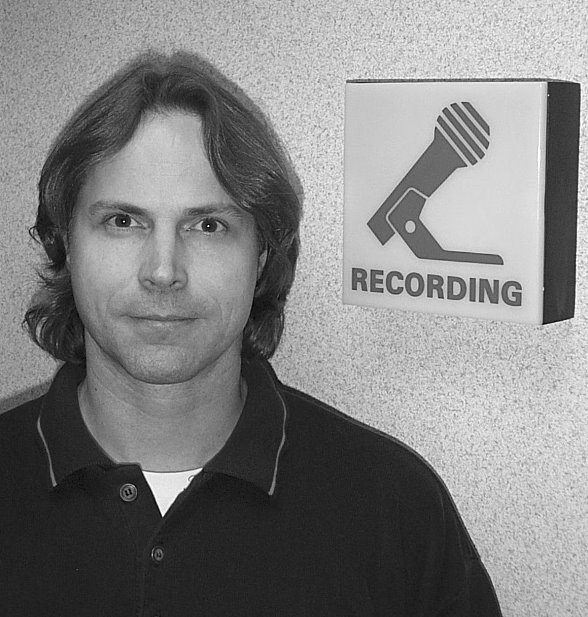 JS: I agree with Rick. When I ended up landing my job with Brandmeier, I actually thought at the time it was just my foot in the door to get an on-air job. But I enjoyed producing so much because I was able to do all of it. I was able to be on the air, come up with ideas, book guests, write parody songs and not have to deal with the every day . . . I’m kind of a moody guy and you have to be on every day and Andy, I’m sure you know, sometimes that’s hard to do and the pressure is great. There’s a lot of pressure being a producer, too. The book came about because Rick and I got together and we’ve been doing this a long time and we thought: What do we have to show for our success? Sure we can go around telling people I produced for Jonathan Brandmeier, Rick for Steve and Garry, Eric and Kathy now, John Records Landecker for Rick, but what do we have? We have nothing concrete, and that’s when the book idea came along. Rick was the driving force on the writing because that’s what he wants to do.
AS: I’ve got to be honest . . . it’s really a well-written and interesting manual. I found it fascinating. A lot of people are going to read this interview and not get a chance to read the manual. So tell them: What’s the single most important thing a person can do to get a start? There are thousands of people out there who would love to have your jobs, just like they’d love to have mine. What would you tell someone? What’s first and foremost?
JS/RK: (Simultaneously) Get an internship.
JS: Absolutely.
RK: Unlike TV, in radio, internships actually lead to jobs. An internship at a television station—I have a lot of friends in TV—especially in a big market like Chicago, just doesn’t generally lead to a job.
AS: So you get an internship while you are in college. You get tons of experience and you get yourself contacts . . .
RK: Sure.
AS: So you guys would make a call to help one of these interns?
JS: Right. That’s it absolutely. You get your foot in the door. As a matter of fact, right here at the radio station [WTMX] two of the people who are on-air as part-time and fill-in started off as interns. Now they’re on the air. Think about it. There are a lot of people who get into this business and their first gig is in Paducah. Here you are coming in out of college, you’re an intern and then you’re on the air at a major market radio station.
RK: Both of us started in Chicago. I went to the University of Illinois in Champaign and came right to Chicago, the third biggest market in the country. And I did it through the producer door, which is not that well known.
JS: (Laughing) Not when we started.
AS: You’ve written the manual now, why not start a business like a talent agency? Help people get jobs. There are agents for TV reporters and anchors. There are agents for radio people, why not do that? You guys obviously know the territory…
(Raucous laughing)
JS: Andy, were you at our last meeting together?
AS: I’ve just been around awhile so it seems obvious. But seriously—is that something you’re thinking of?
JS: We joked around about what we would say if you asked us certain things and we were going to say we were saving that for the next book or the next chapter of our lives. Actually there are many possibilities and . . . do we have to say?
RK: Obviously we’re available for that. Personally I’m consulting with the Loop [WLUP] morning show. I’m not there full-time. I’m coaching the people that are on the air and the producer. I’m training them. That is probably something that is our future in the long run.
AS: Considering that all of us have short shelf lives…
JS/RK: Exactly. Right. Absolutely.
AS: Tell me about the major talents that you’ve worked with, something that people would never know just by listening to the shows. What’s one secret about Eric and Kathy that listeners to the morning program don’t know? Without violating any confidences, of course.
(Long, loud laughing)
JS: Wow.
AS: (Prompting, like a producer) Eric picks his nose during the commercials . . . Kathy is always adjusting her bra strap, something like that.
JS: Well, maybe the audience does know this . . . Kathy can out-belch anybody. And I’m talking loud and longggg.
AS: She’s done this on the air?
JS: On the air, I don’t think she’s done it.
AS: How could you pass up a bit like that?
JS: Because it’s not very ladylike, is it? Eric, geez, I’m trying to think . . . what would the audience not know . . . Eric and Kathy are pretty much an open book on the air. They pretty much tell it all . . .
AS: All right, how about Brandmeier?
JS: (Laughing) I will say this about Jonny: He’s very intense. As I stated in the book, I would not be where I’m at now if it wasn’t for working with Brandmeier.
AS: Is that good or bad?
JS: I think it’s good. He ended up being able to teach me what makes a morning show work. He was all about show business. He always made it bigger than life.
AS: That’s why he took it out to California.
JS: That’s what made it so much fun. A very, very intense guy, but once the show was over, boom.
AS: OK, Steve and Garry, as dysfunctional as . . .
RK: Totally, every bit as dysfunctional.
AS: Garry gets a $10 million deal that all of a sudden he walks away from because he wants his wife to be his agent? I love Garry, but what’s with that?
RK: Garry is a unique guy. Let’s just say, I produced their show for about five years. Garry and I didn’t have a lot of in-depth conversations. He’s not that kind of guy. He is what he is. He shows up, he does his job. He is the best second banana in the business, ever. I don’t think there has ever been anyone as good as him . . . Steve is a complex guy.
AS: . . . but great staying power.
RK: Absolutely.
AS: It’s hard to survive 25 years . . .
RK: . . . and he’s still right at the top. I have a lot of respect for him. Steve taught me to not screw up because if I ever screwed up, 300,000 people would know about it. So he taught me a lot.
AS: . . . and John Records Landecker?
RK: The thing that people don’t realize about John is that he’s very energetic on the air, super energetic, I’ve never met anybody more energetic. Off the air, he’s nearly comatose. He uses every ounce of energy that he has for the show. He puts everything into it.
AS: Have you guys decided which private security firm is going to handle the crowds at the book signing when thousands of people are lined up around the block?
(Laughing)
One final question and that should take care of it. Rick, you don’t have a show, so I can’t ask you this. This is for you John . . . Will you agree that Eric and Kathy will say nice things about me every day from now on?
JS: I’ll work on that for you. I’ll do my best. Actually, when we were talking about radio being mean and sexual, I meant to add that the Eric and Kathy Show is not mean at all, that’s why it’s been so successful . . .
AS: The sex on the show is kind of like training bras.
JS: It’s right up to the line. The best part about it is the women know what we’re talking about without us getting graphic about it, which is great.
RK: And for the record, I advised John not to play that tape of you. I said that it was just over the line to keep repeating you screaming for the microphone.
AS: I would think he wouldn’t want to miss such a great opportunity. And it wasn’t just him, WGN has gotten a lot of mileage out of it, and bless them. We’re all still working.
RK: I’ve heard it on other stations, too, by the way.
AS: You know what they always say. Just spell my name right.
Postscript: "The Radio Producer’s Handbook" was recently published by Alworth Press. You can buy it in bookstores, or online from Amazon or Barnes & Noble for $19.95, and it’s a must for anyone who wants to break into radio. But this story comes with a warning: I play in the radio air from time to time as a fill-in host on WLS Newstalk 890. So if Rick and John get lucky enough to do a book tour, and it happens to coincide with one of my fill-in radio host gigs, I will get even. Tough Love. Reality Radio. Take your pick.
(Lake Magazine: Holiday 2004 issue)
Did I mention the book is still available? Click here....The Radio Producer's Handbook
Labels: Rick Kaempfer press clippings, The Radio Producer's Handbook
posted by Rick Kaempfer at
12:01 AM


